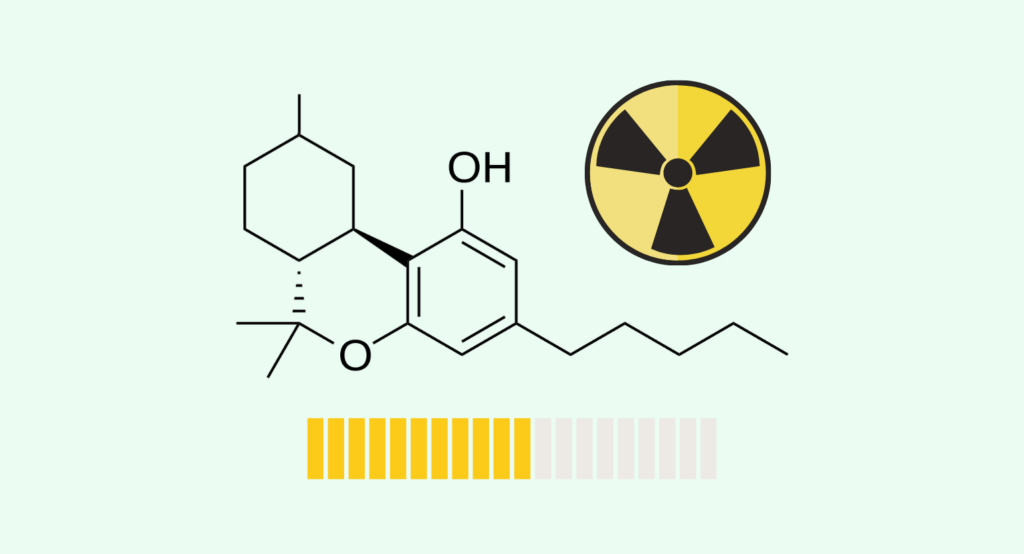
With more information about HHC becoming available, the science of it all may be confusing, but we got your back.
Nowadays, it almost feels like the cannabinoid market is throwing out alphabet soup with all of the new compound names. With THC-O, THCV, CBG, CBN, and so many others, it seems like a chemistry lesson in itself just to keep up with all of the names.
What is HHC-O?
HHC-O is an acetate version of HHC. In short, HHC is acetylated using chemicals, and the product is a compound that is more bioavailable in the body. What does this mean? HHC-O is more potent than HHC.
The acetylation process to make HHC-O is not very different from the same process that creates THC-O, which is 3x more bioavailable than THC, making it “3x stronger.” This acetylation reaction is not new, though. In fact, many of the “extra strength” medicines that you can buy over-the-counter, such as Advil and Tylenol, are created from acetylation.
What is 9R HHC?
During the process of converting THC to HHC, two products are formed: 9R HHC and 9S HHC. We’ll cover 9S below.
9R HHC is the actively binding cannabinoid that produces the “high” that we’re all familiar with. It will bind to your body’s natural endocannabinoid receptors, giving a euphoric, relaxing, and slightly psychoactive experience.
What is 9S HHC?
On the flip side, there’s 9S HHC. Unlike the actively binding 9R HHC, 9S doesn’t fare so well in the body. Since it doesn’t bind as effectively, it doesn’t really contribute to HHC’s potency. Many scientists have noted that 9S HHC is more comparable to CBN than THC.
The two cannabinoid enantiomers being formed during the conversion process follow the scientific trend of one being more potent than the other.
How do 9R HHC and 9S HHC affect potency?
So now that you know what 9R and 9S HHC are, you’re probably wondering, “So what?” Since the extraction and production of HHC are relatively new, it is still cost-inefficient to isolate the two isomers. Thus, the challenge to creating efficacious HHC products lies in the ratio between the 9R and 9S HHC isomers. A higher 9R to 9S ratio yields a more potent product, while a lower ratio nets a less potent product.
However, as HHC continues to enter the market, we can probably expect to see companies discover more efficient ways of producing potent and efficacious HHC. Until then, we’ll keep you updated.
 HHC
HHC 
Leave a comment